
NEMT, childcare, workplace safety, and exposure prevention
Why Bloodborne Pathogens Training Matters in Everyday Workplaces
Bloodborne pathogens training helps transportation providers, childcare workers, caregivers, cleaning teams, and workplace responders recognize exposure risks and follow safer procedures.
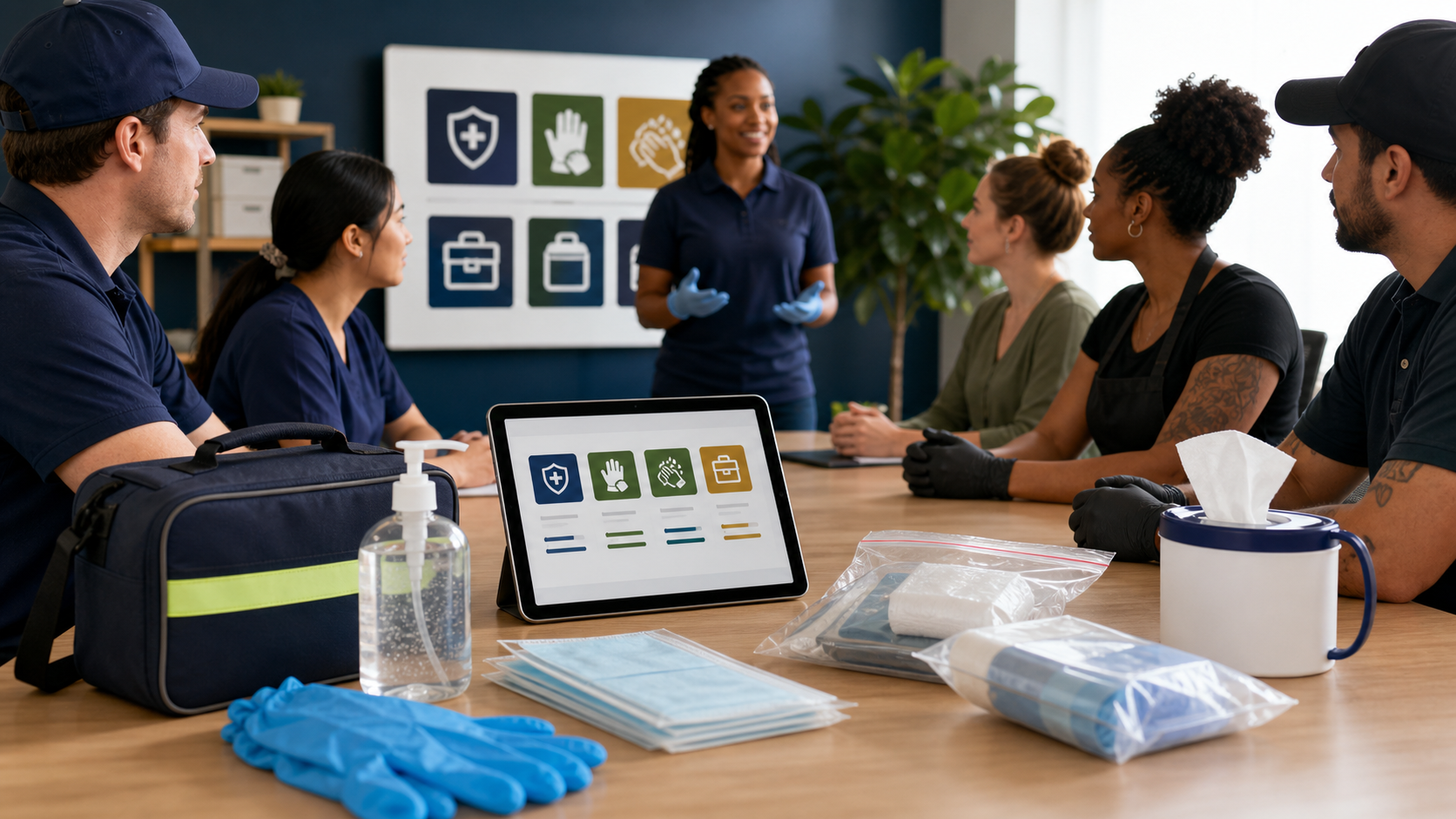
Exposure can happen outside clinical settings
Bloodborne pathogens training is often associated with hospitals, clinics, and emergency response. But the need for this knowledge is much broader. Workers in transportation, childcare, tattoo and body art studios, schools, cleaning services, assisted living, home care, security, and other public-facing roles may encounter blood or other potentially infectious materials during normal work.
A transportation provider may assist a passenger after a fall. A childcare worker may clean up after a nosebleed. A tattoo studio employee may handle contaminated sharps. A custodian may encounter blood during cleaning. A workplace team member may help after a minor injury before professional help arrives.
The point of training is not to turn every employee into a medical professional. The point is to help people recognize risk, protect themselves, respond correctly, and understand when an exposure incident needs to be reported and documented.
Why the risk matters
Bloodborne pathogens such as hepatitis B, hepatitis C, and HIV can be transmitted through contact with infected blood or certain body fluids. The risk may be low in many situations, but it is serious enough that workers should know how to reduce exposure and respond appropriately.
Training helps employees pause before touching potentially contaminated materials, choose appropriate protection, use safer cleanup practices, and avoid shortcuts that increase exposure risk.
OSHA expects employers to identify and control occupational exposure
OSHA's Bloodborne Pathogens standard, 29 CFR 1910.1030, applies when employees have occupational exposure to blood or other potentially infectious materials. Covered employers are expected to train employees with occupational exposure, maintain an exposure control plan, use engineering and work practice controls, and address post-exposure evaluation and follow-up when an exposure incident occurs.
Training helps employees understand not only what the hazards are, but also how their workplace expects them to act. That includes using personal protective equipment, following hand hygiene and cleanup procedures, handling sharps correctly, avoiding unsafe shortcuts, and reporting incidents through the proper channel.
Training protects both employees and employers
For employees, bloodborne pathogens training supports safer decision-making under pressure. For employers, training is part of a broader safety responsibility: identifying roles with possible occupational exposure, providing training when required, maintaining procedures, and making sure workers know how to report and respond to exposure incidents.
Good training also reduces confusion. Employees should not have to guess whether to clean something, what protection to use, or who to notify. A trained workforce is more likely to follow consistent procedures and less likely to improvise in unsafe ways.
Who should consider bloodborne pathogens training?
- Healthcare support workers and caregivers
- NEMT and passenger transportation providers
- Childcare and school staff
- Tattoo, piercing, and body art workers
- Cleaning and janitorial teams
- Security staff
- Workplace first responders
- Assisted living and home care teams
- Any employee whose duties may involve reasonably anticipated exposure
A practical next step
Bloodborne pathogens training should help learners understand real workplace risks, OSHA expectations, exposure prevention, cleanup basics, and what to do after a possible exposure.
Cascade Horizon Academy provides online Bloodborne Pathogens Certification designed for workers and employers who need practical, verifiable training documentation. Learners complete the course online and receive a QR-verifiable certificate that can be stored and shared for employer or compliance review.