Emergency readiness for workplaces and public-facing teams
Why First Aid, CPR, and AED Training Matters Before an Emergency Happens
First Aid, CPR, and AED training helps workers recognize danger, call for help, provide basic support, and use an AED when one is available.
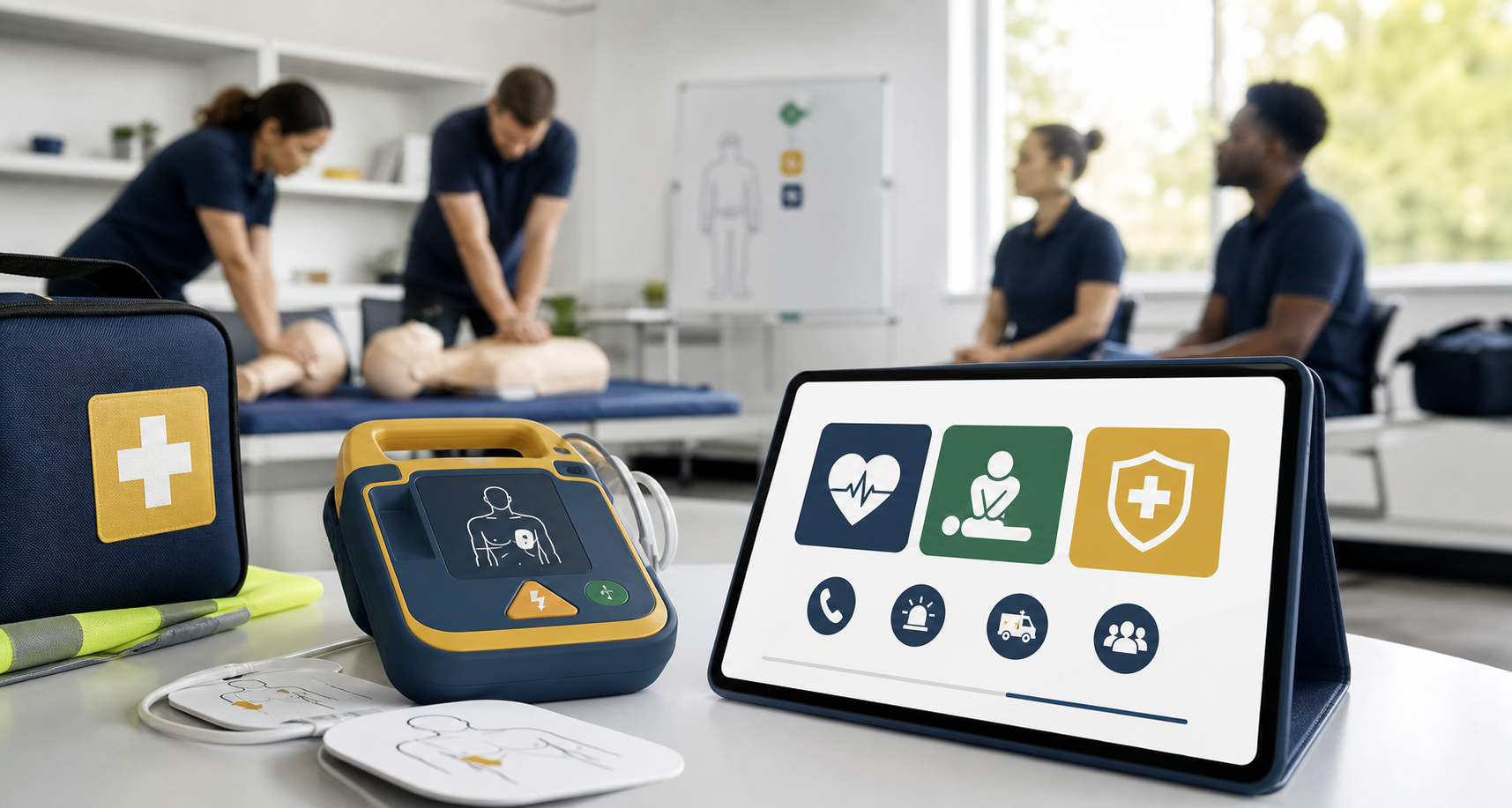
Emergencies happen quickly
A passenger may become unresponsive during transportation. A child may choke during care. A coworker may collapse at work. A customer may fall, bleed, or show signs of serious distress.
First Aid, CPR, and AED training matters because the first few minutes of an emergency can shape what happens next. Training gives ordinary workers a clearer sequence to follow: assess the scene, call for help, protect themselves, provide appropriate support, and continue until emergency medical services arrive.
CPR is about keeping blood moving until help arrives
The American Heart Association explains that CPR is used when the heart stops beating. Immediate CPR can improve the chance of survival after cardiac arrest because it helps keep blood flow active until emergency medical services arrive.
The CDC describes cardiac arrest as a situation where a person may suddenly collapse, stop breathing normally, and not respond. In that moment, bystanders should call 911, look for an AED, and begin CPR until medical professionals arrive.
For public-facing workers, that knowledge matters. The person closest to the emergency may not be a paramedic. It may be a driver, teacher, caregiver, receptionist, coach, coworker, or manager.
AED awareness is part of modern emergency readiness
Automated External Defibrillators are designed to help during certain cardiac emergencies. Training helps people understand where AEDs may be located, how to follow device prompts, and why rapid defibrillation is part of a strong emergency response system.
Even when someone is nervous, training creates a mental map: check responsiveness, call emergency services, send someone for an AED, begin compressions when appropriate, and continue until help arrives or the person recovers.
First aid fills the gap before professional care
Not every emergency is cardiac arrest. Workers may also encounter bleeding, burns, falls, choking, allergic reactions, seizures, heat illness, or sudden medical distress. First aid training helps learners understand basic priorities: protect themselves, assess the scene, call for help, avoid causing further harm, and provide appropriate support within their role.
For transportation providers, this is especially important because drivers may be alone with a passenger when a problem occurs. For childcare workers, emergencies can happen quickly and require calm, structured action. For employers, having trained staff supports a safer workplace and a more prepared team.
Training builds confidence and consistency
The goal of First Aid, CPR, and AED training is not to replace emergency medical services. The goal is to prepare people to act during the critical window before EMS arrives.
- Recognize warning signs
- Activate emergency response quickly
- Understand basic CPR and AED concepts
- Respond to choking, bleeding, and common injuries
- Protect themselves while assisting others
- Know when to stop and wait for professional help
A practical next step
Every workplace and public-facing team should think about emergency readiness before an incident occurs. That includes training, AED access where appropriate, emergency action procedures, and renewal tracking.
Cascade Horizon Academy provides online First Aid, CPR, and AED Certification for learners and employers who need structured training and verifiable certificate documentation. The course is designed for practical workplace readiness and includes QR-verifiable certificate delivery.